01 · The Library — The Material World
How to Stop Feeling Guilty About AI
The new oil wells don’t pump anything. They answer questions.

The dirtiest thing I did all morning was ask a question.
It’s August in Bariloche, which means winter. The gas heater is burning something pulled out of the ground more than a thousand kilometers away. There’s music streaming through my headphones, a chat window open on a laptop built from mined metal, and me, asking an AI to find me a paper on wildfire smoke. Somewhere on the planet, a warehouse full of hot servers clears its throat and answers in four seconds.
I read that this habit is helping to cook the planet almost daily, so I looked up what my question cost.
One second of a clothes dryer. That’s the energy bill for a chatbot prompt.
Google measured its own and came up with a quarter of a watt-hour, the electricity in nine seconds of television. So my year of research, stacked against my heater, wouldn’t even register.
And about the water consumption everyone freaks out about: golf courses in the US alone pour 550 billion gallons a year just to keep the grass looking green on steroids, and households there spray three trillion gallons onto lawns for a “crop” nobody eats, that gets cut every week with a loud gas mower. Meanwhile, all US data centers combined drank around 100 billion gallons in 2023. Build ten times more servers and the grass still wins.
I had my absolution, and I nearly published it: the panic picked the wrong villain, your prompt is a rounding error, everybody calm the f* down.
Then a climate scientist in San Francisco published his electricity bill.
Antarctic Sapiens is a reader-supported publication and it needs your modest subscription to stay alive!
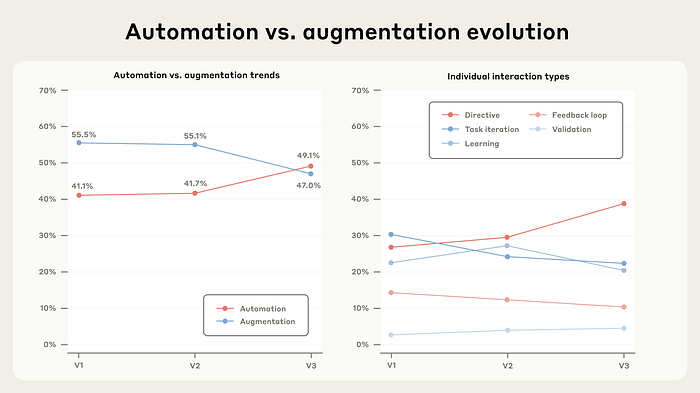
An airport with cheap flights You type, it answers, the end: that’s how AI worked when it went mainstream in 2023. What’s grown since are agents. You give the machine a goal instead of a question, and it works alone: opens files, writes, runs its own output, reads the result, tries again, dozens of rounds per request. Nearly all professional AI now moves this way. Anthropic’s own traffic analysis found 97% of business use follows these automation patterns.
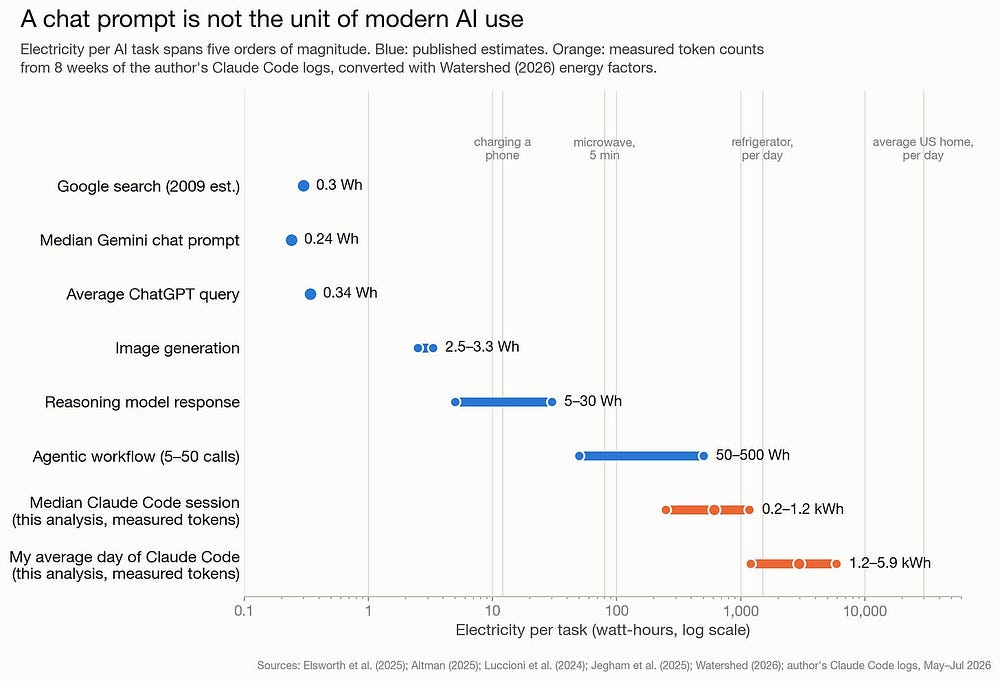
So a renowned climate scientist, Zeke Hausfather, pulled his own usage logs. His 1,138 typed prompts had set off 14,000 model calls and 3.2 billion tokens. Per prompt, roughly 600 times the chat numbers. His average working day of AI drew more electricity than two refrigerators. A prompt, he wrote, is no more a unit of AI use than “trips” is a unit of driving. What matters is how far you go.
The people who do emissions accounting say the same thing, just from the other side: the energy used by “an AI task” can vary wildly (like five orders of magnitude) from something tiny like tagging a photo to something huge like running an agent for hours. So a single “energy per prompt” number can miss the real load by a factor of ten or more. And even if the chips keep getting more efficient, that doesn’t automatically solve it. Hardware got roughly 150 times better per joule over the last decade; the cost per prompt dropped, and total AI electricity still went up, because when something gets cheaper, people just want more of it. Nobody ever emptied an airport with cheaper flights.
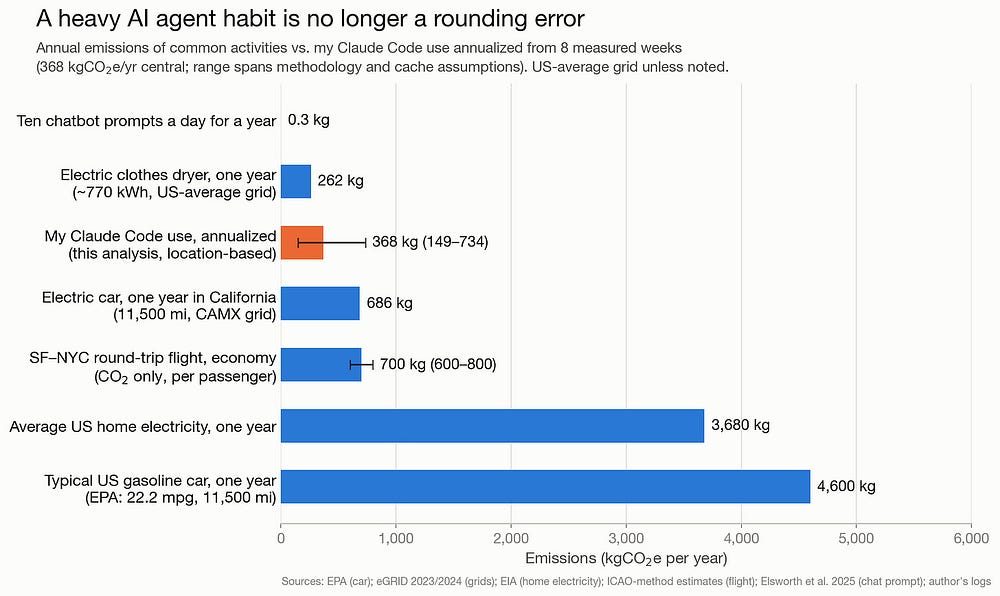
I don’t run swarms of coding agents. My AI habit is for regular stuff: research, editing, turning transcripts into notes, little background chores. But even that “light” use can mean long sessions where the model rereads my notes over and over. So whatever my real footprint is, it’s not a cute “one dryer-second per prompt” number.
And the thing that took me a while to get is: it matters, but also it doesn’t matter that much. My number, your number, the influencer’s number, all of them together describe the smallest moving part of the system, the only one the system wants us to see.
But the interesting meter was never on the chat window.
A kid asks why the water is salty Montevideo, 2023. Uruguay is deep in its worst drought in seven decades, and the capital becomes the first in the world to hit day zero :
the reservoirs give out, and the water company starts mixing brackish river water into the pipes. The president visits a primary school, and a student asks him, straight up, why the water is salty. “We have to wait for the rain,” he tells the kid.
While the country waits for the rain, a ministry file moves forward: a proposed data center that would cool itself with 7.6 million liters of drinkable water a day, the daily water of 55,000 people, in a duty-free zone, for about 30 permanent jobs. Three thousand people march through Montevideo on World Water Day. Across the Andes, Santiago’s environmental court reads the numbers on a Google server farm and pulls part of its permit, telling the company to redesign its cooling before it touches the city’s aquifer again.
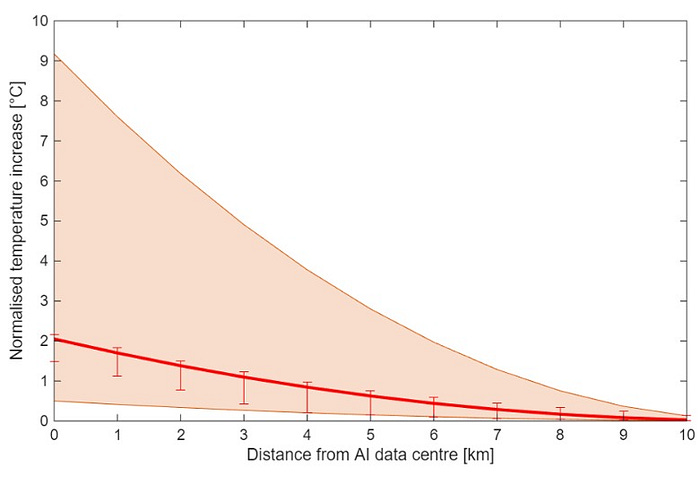
Ireland got further down this road than anyone. Its data centers ate 23% of the national electricity supply last year, more than every urban home on the island combined, up from 5% a decade ago, growing every single year straight through a moratorium on new grid connections. Around the densest clusters, the buildings change the weather on their own street: early measurements find the surrounding blocks running 2°C 3.6°F hotter on average, up to 9°C 16°F .
In the UK, the water industry now says the government’s supply forecasts are “fatally flawed” because they left data centers out entirely. London’s assembly found server projects stalling new housing, and this month the government approved an East End redevelopment carrying a data center and 44 homes — the local council wanted 350 homes.
‘Homes or servers’ stopped being a slogan when it became something officials had to vote on.
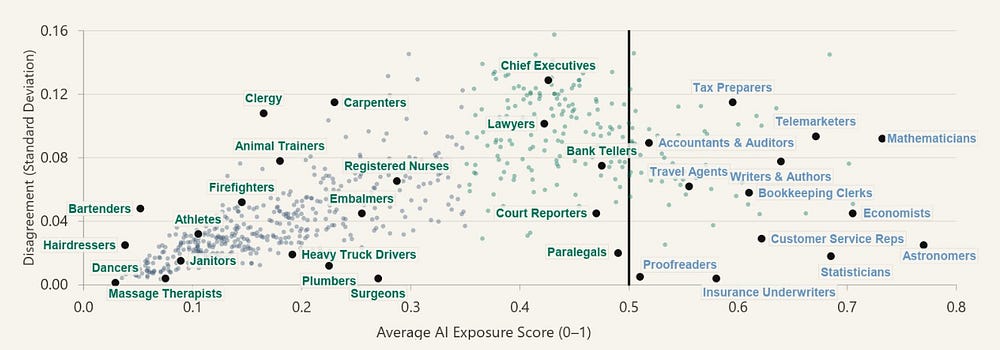
The U.S. has been cutting the biggest checks. States and towns hand out data-center subsidies that work out to millions of dollars per permanent job. In Illinois, $5.4 billion in subsidized investment produced 339 jobs, the staffing of two supermarkets. There’s another cost people don’t see right away. In jobs most exposed to the software those buildings run, wage growth has been so weak since 2023 that economists estimate about $28 billion in lost wages across 5.8 million workers.
And where the grid says no, the servers bring their own fire. In South Memphis, an AI company powered its flagship facility with up to 35 gas turbines it never had permits for, in a corner of the city already infamous for asthma, and when lawyers forced those out, 27 more unpermitted turbines appeared across the state line, now the subject of a federal Clean Air Act lawsuit. In Texas, one new data-center power plant has a permit to emit 33 million tonnes of CO2 a year, enough to crown a warehouse of servers the biggest single source of climate pollution in the country.
Land taken. Water drawn. Air burned. Locals paid in promises while the profits ride out of town.
Any oil town on Earth can recite that sequence from memory.
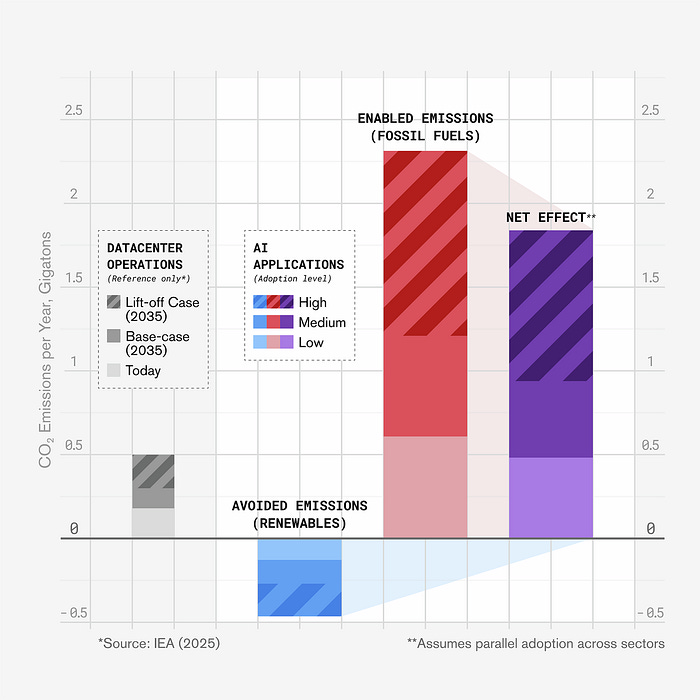
The well moonlights as the geologist The first modeling of AI across the whole energy sector, published this month, found that the productivity AI hands the fossil-fuel industry (sharper seismic imaging, faster drilling, cheaper extraction) enables three to thirteen times more emissions than all its data centers produce. On the low end, an extra Mexico of annual pollution. On the high end, an extra Russia. This is already happening in the field: Equinor credited AI assisted seismic work for 27 discoveries on the Norwegian shelf, including its largest operated find of 2025, while analysts value the technology at half a trillion dollars for oil exploration this decade and executives toast “the next fracking boom.”
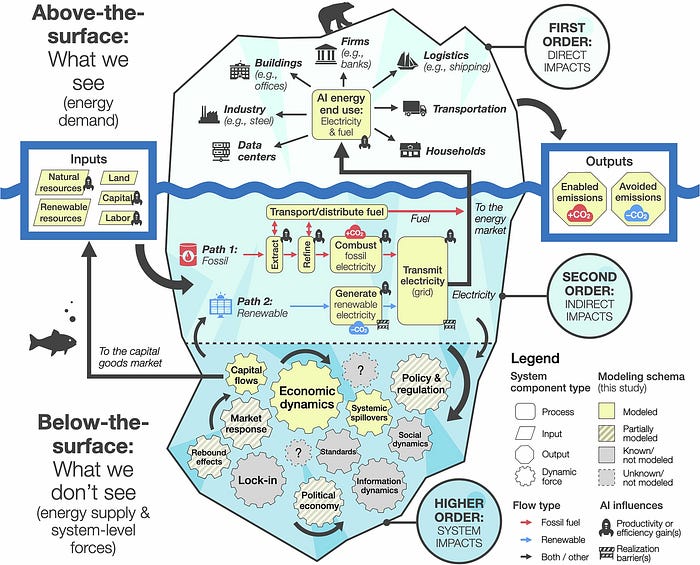
A data center doesn’t just drink and burn like an oil well. It scouts for the next one.
The argument that absolved me, this whole “your personal footprint” obsession, has a birthday, by the way. In 2004, an oil company (surprise!) and its ad agency handed the world a carbon footprint calculator, a neat little personal guilt-math app. And it worked, of course it did, because they control and manipulate the largest outlets and narratives. So for twenty years, while an industrial machine kept pouring emissions into the sky, we argued about flights and burgers and tote bags like the planet was going down because you ordered the wrong lunch.
The con was never the number. The con was where they put the meter: on you, turned inward, so you’d police yourself instead of the people running the furnace.
This whole “energy-per-prompt” argument is that same install, just running in both directions at once. “Your prompt is boiling the ocean” keeps you staring at your chat window feeling guilty. “Relax, it’s basically nothing,” keeps you staring at the same window in relief.
Either way, you’re still focused on your tiny slice of the story, the meter on your side of the glass, while the companies building these new ‘wells’ march toward trillion-dollar valuations without publishing an emissions report, a net-zero plan, or even a basic sustainability disclosure.
You (we) get quantified, scolded, shamed down to the watt-hour per question. The well doesn’t report a damn thing. It takes what it wants, bills you for the privilege, and then lectures you about your “personal carbon footprint” like you’re the problem.
It’s almost weirdly pretty from above: thermal drone footage of rows of turbines glowing white-hot behind a chain-link fence. They’re still running, two weeks after regulators said they need permits, pumping exhaust over a neighborhood that never asked for any of this.
That’s what it looks like when someone finally points an instrument at the correct side of the glass.
The soothing version of this story ends by telling you where your power lives: in social norms. Close the chat window. Mock the slop. Make outsourcing your sentences feel like loser behavior. Good advice for deciding what AI should be for, but it doesn’t do much to limit what these companies get to build and take. Nobody ever capped a well with etiquette. Wells get stopped in boring rooms: the zoning board, the water authority, the grid queue, the environmental court.
Which is where this fight already lives.
Three thousand marchers in Montevideo and a judge in Santiago made two of the biggest companies alive redesign their plumbing. New York froze its largest new data centers for a year. Texas now makes new ones wait for review of their water and power draw, and seven in ten adults in the US don’t want one next door.
Some politicians (the expected ones) shrug and say, “You can’t fight it.” But courts, communities, and empty reservoirs are saying: actually, you can.
So yeah, keep your prompt. You weren’t doing anything wrong.
It was never the main issue in the first place.
Sources
Every claim in a house essay carries a source. The number beside it in the catalogue card is counted from this list, so it appears when the list does. The full bibliographic records — author, year, publisher, DOI, and an archived copy so the footnotes do not rot — move across with the migration from Substack.