Antarctic Sapiens
The Antarctic Sapiens seal: the outline of the continent with the wordmark brushed across it.

The floor of the eye

05 · Colophon — the pupil

The ideas are the protagonist. We are their stewards.

A colophon is the page where a press says how the book was made. This is that page, for a house that makes arguments instead of books.

05 · The house — how it came to exist

Antarctic Sapiens is an editorial studio at the end of the world. It publishes essays under its own name and does commissioned work under the same craft, and the two halves are in one building on purpose.

It began as Southern Winds, a newsletter written from Patagonia about the things the South can see that the North cannot. The newsletter found an audience faster than it found a name for what it was doing, and the name that eventually arrived came from the drawings rather than from a strategy: the same mark had been turning up in the covers for years — an iris, a circle, a pupil with something inside it.

So the house was not designed. It was noticed, and then built to match.

Southern Winds continues as an imprint. Essays published under it carry the tag, and the Medium pages stay live as distribution.

05 · Two poles — one predicament

Portrait plate for Ricky Lanusse: two photographs of Earth held inside overlapping irises.

Ricky Lanusse

RL · Founder & editor · Patagonia

Writes from the Patagonian side of the argument, in Spanish and English, neither of them translated.

Founded Southern Winds; edits the Library; takes the Studio commissions.

The recurring subject is the gap between evidence and belief, which is also the commercial problem the Studio sells into.

Has been drawing the same eye for about fifteen years without noticing.

His shelf — 13 essays

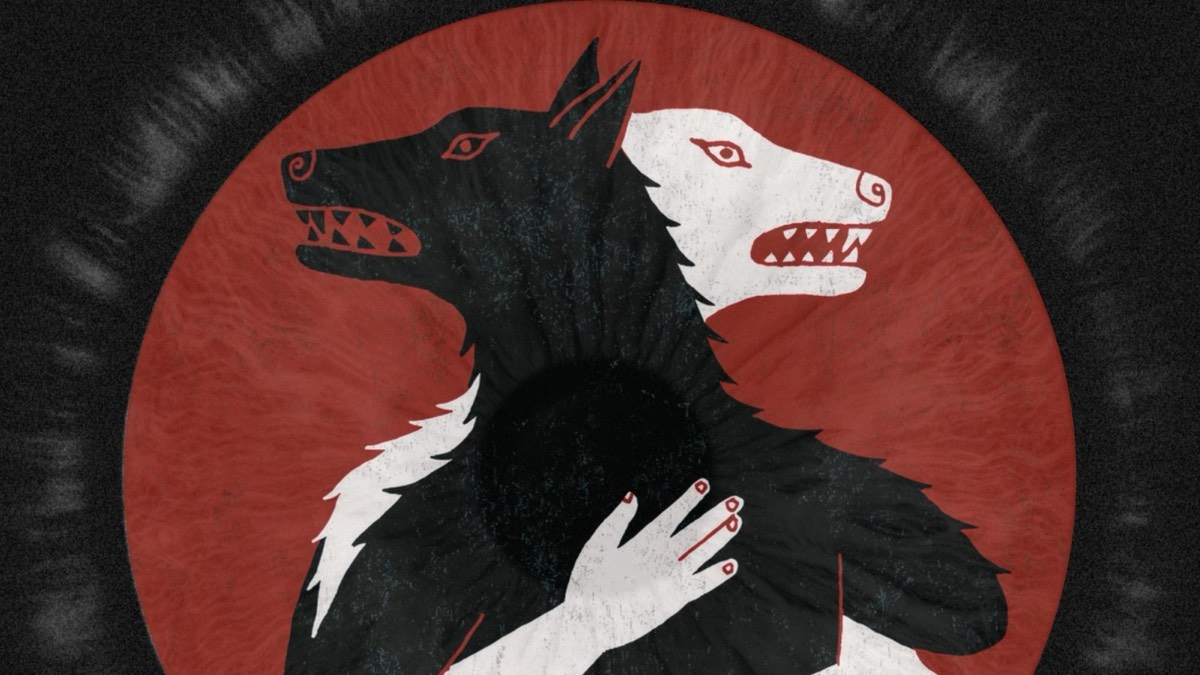
Portrait plate for Martina H: a two-headed wolf, one head black and one white, on a red circle.

Martina H

MH · Co-editor · Swedish Lapland

Writes from the other end of the same problem, above the Arctic Circle, where the ice is doing the same thing in the opposite hemisphere.

Co-edits the Library and carries the Material World and Mind & Attention currents.

Reads every house essay before it is published, including the ones she did not write.

Works on the editorial side of the house only, by standing arrangement.

Her shelf — 7 essays

Two editors, two shelves, and no pretence that they are the same size. Equal treatment is a design decision the house can keep; equal inventory would be a claim about the archive that is not true, and the register forbids that more firmly than it forbids anything else.

05 · How we count — the method behind the number

The house asks its clients to source every claim. This is the house sourcing its own.

The strip on the front page carries a readership figure. Here is exactly what it is and is not.

What is counted

Confirmed subscribers to the Southern Dispatch and its predecessor, as reported by the email provider on the cut date, excluding unconfirmed, bounced and unsubscribed addresses.

Unique readers of house essays on external publications, taken from the publisher's own analytics, deduplicated within each platform but not across them.

What is not counted

Impressions. Social followers. Newsletter opens. Page views of any kind. None of those is a reader, and three of them can be bought.

Why one number and not two

An earlier draft of this site carried two figures on the same screen, four centimetres apart, that differed by two orders of magnitude. One was counting impressions and the other was counting recurring readers. Both may have been true; together they were not a claim, they were a mess.

So the house publishes one figure, the defensible one, with its cut date beside it. The other line was rewritten without a number in it.

The open item

The component figures are not published yet, because the baseline has not been frozen — the export from the email provider and the publisher analytics are being reconciled to a single cut date before either is printed.

Until they are on this page, the figure on the front is provisional and marked as such. If the components do not support it, the figure comes down. A house that asks a carbon company to source its claims does not get to round its own.

05 · Type & tools

Display and headings are set in Tobias, a contemporary serif with enough contrast to carry a headline at five and a half rem and enough restraint to survive a standfirst in italic.

The catalogue layer — navigation, dates, author codes, shelf marks, source counts, form labels — is Geist Mono. That layer carries real information, so it never drops below the size at which a person can read it on a phone.

Body copy is Geist Sans at 1.125rem over a 1.7 leading, in a measure of sixty to sixty-eight characters.

The brush lettering lives inside the Seal and nowhere else. Below 120 pixels the Seal loses its letters, so at small sizes it is replaced by the Continent outline rather than shrunk.

Founded
Patagonia, Argentina
Editor
Ricky Lanusse · RL
Co-editor
Martina H · MH
Imprint
Southern Winds
Languages
English · Español
Display
Tobias
Catalogue
Geist Mono
Body
Geist Sans
Essays
20 across four currents
Editions
3 · two free
Dispatch
Weekly · issue 42
Analytics
Cookieless · no consent banner

The analytics are cookieless because a consent banner is exactly the kind of interruption the register forbids, and choosing a tool that needs one would have meant choosing the banner too.


Why Correspondence has no number

The numbering is a library's classification system, and a library does not put a shelf mark on the loans desk. The numbers classify published work; a page for writing to us is not published work.

So Correspondence sits to the right of the numbered group, separated by a rule, in the house red. Visually distinct, equally reachable, and in a different category on purpose.

How we correct ourselves

A correction is appended to the essay with its date, and the original wording stays visible. Nothing is silently edited after publication except a typo that changes no meaning.

Corrections that change a conclusion are also carried in the next Dispatch, because the people who need to know are the ones who already read it and have gone away believing something.

The public register of corrections opens with the first one. There is no virtue in an empty page announcing our integrity.

What Southern Winds is now

An imprint of the house rather than a separate publication. Essays published under it carry the tag in the catalogue and are filterable in the Library.

Its Medium pages stay live as distribution — that is where a good part of the readership still is, and taking it down to tidy an architecture diagram would be a bad trade.

Why the eye

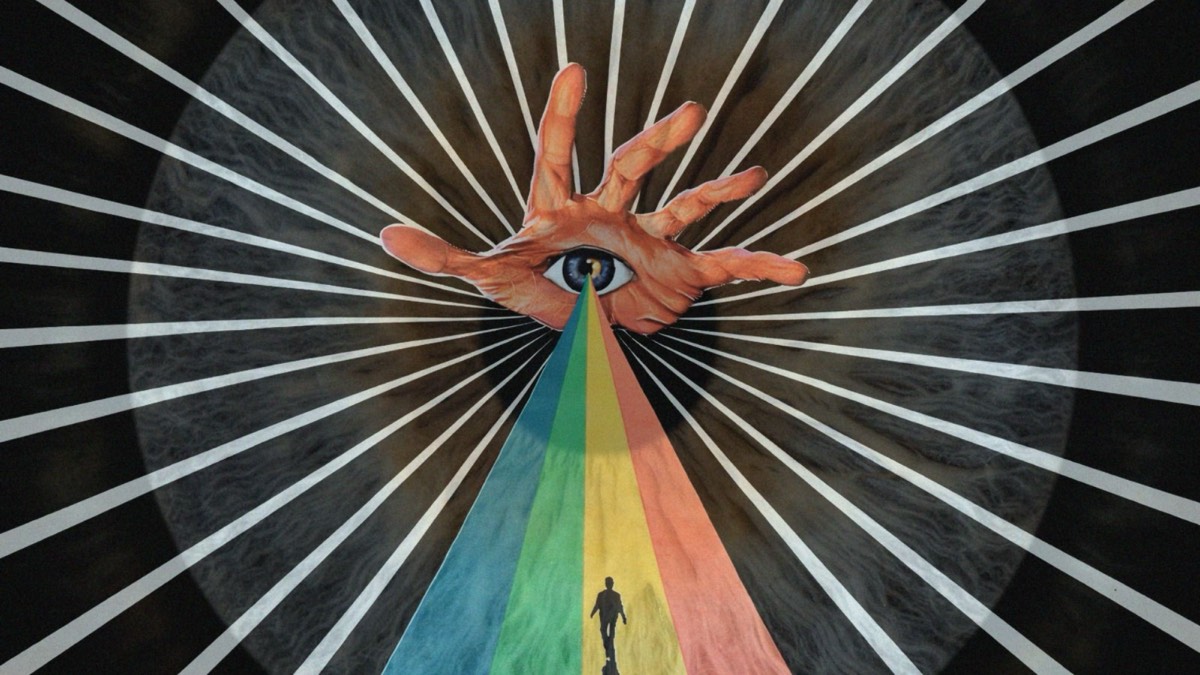
It was in the covers before it was a logo. An iris reads as a witness, a lens, a pupil, a planet, and the first ripple from a stone — and no other studio can claim it, because it was extracted from a body of work rather than invented by a brander.

On the site it is a law of composition rather than a decoration: covers cropped through it, portraits inside thin rings, section markers as small circles, and every room set inside its own zone of the same photograph. The front page is the only place it is allowed to be the subject.


The house is run by its editors and read on every continent. If you have something true that nobody can feel yet — write to us.